


Vertically Integrated Projects (VIP) provides UMD students of all backgrounds, disciplines, and levels of experience with the opportunity to engage in scaffolded, multidisciplinary team-based projects.
Why Join a VIP Team?

Students
-
Earn academic credit while gaining hands-on experience on a scaffolded, multidisciplinary, faculty-led research team.
-
Participate and grow for multiple semesters.
-
Develop discipline-based skills and broad professional competencies, including enhanced abilities to communicate, think critically, lead, and operate as a professional within a team-based environment.
-
As your VIP experience grows semester to semester, develop as a leader.
Why Start a VIP Team?

Campus Partners
-
Advance your research & innovation with long-term student support.
-
Lead a multidisciplinary, scalable team with sustained peer mentoring.
-
Launch, grow, and succeed through the support we provide for student recruitment, team selection, course creation and scheduling, and other related materials.
-
Be a part of a community of VIP Faculty Mentors who meet, discuss, and grow together.
Current VIP Teams
3D-Printed Video Game-Playing Soft Robots


Dr. Ryan Sochol
Mechanical Engineering
Belonging for Immigrants and Refugees with Disabilities (BIRD)


Dr. Veronica Kang
Department of Counseling, Higher Education, and Special Education
Biosensors


Dr. Catherine Spirito
Office of Undergraduate Research
Exoskeleton Explorers: Arthropod-Inspired 3D Printed Robots


Dr. Molly Carton
Mechanical Engineering
Integrated Media for Policy, Agriculture, Climate & Technology


Dr. Rebecca Epanchin-Niell
Department of Agricultural and Resource Economics
Quantum Machine Learning


Dr. Shabnam Jabeen
Office of Undergraduate Research
RetroComp


Dr. Jeffrey Moro
Maryland Institute for Technology in the Humanities
The Immersive Realities in Digital Humanities Workgroup


Dr. Marisa Parham
Department of English & Maryland Institute for Technology in the Humanities
Wood Vault


Dr. Ning Zeng
Atmospheric and Oceanic Sciences
<desc> lab


Dr. Raffaele Viglianti
Maryland Institute for Technology in the Humanities
Beyond Co-Intelligence


Mr. Kevin Calabro
Keystone Program
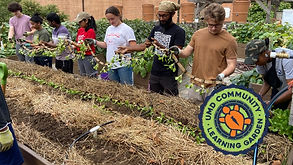
Community Learning Garden

Meredith Epstein
Institute of Applied Agriculture
Food, Integrated Environmental, Animal & Laboratory Detection Systems


Dr. Magaly Toro
Joint Institute for Food Safety and Applied Nutrition
Integrating Sociology in Technology, Engineering, and Policy (INSTEP)


Dr. Timothy Reedy
Science, Technology, and Society
Research/Research


Dr. Cari Ferguson
Office of Undergraduate Research
Sodium Fire Safety in Nuclear Power Plants


Dr. Peter Sunderland
Fire Protection Engineering
Water Quality, Outreach, and Wellness - WOW, What a Team!


Dr. Brienna Anderson
Department of Global, Environmental, and Occupational Health
Baby Brains


Dr. Tracy Riggins
Department of Psychology
Beyond-Lithium Battery Materials


Dr. David Stewart
Materials Science and Engineering
Engineering on the Edge of Space


Dr. Mary Bowden
Aerospace Engineering
Go with the Flow!


Dr. Ken Kiger
Mechanical Engineering
Mini-Breadboard Data Center


Dr. Lingnan Lin
Mechanical Engineering
Researching Innovative Tools for Meaningful Digital Engagement


Dr. Ronald Yaros
Philip Merrill College of Journalism
TestuGo: A Bluetooth Navigation & Exploration App


Mr. Bryan Quinn
Electrical and Computer Engineering
Wind TERPines


Dr. James Baeder
Aerospace Engineering
The VIP Movement & UMD

Originally created at Georgia Tech and Purdue University, Vertically Integrated Projects has been making an impact for over 20 years at universities across the globe.
Vertically Integrated Projects is a transformative approach to enhancing higher education by engaging undergraduate students in ambitious, long-term, large-scale, multidisciplinary project teams that are led by faculty. The program has been rigorously evaluated and refined over more than two decades.

UMD's initial investment in Vertically Integrated Projects was led by the A. James Clark School of Engineering. Engineering and the Office of Undergraduate Research are now moving forward as collaborative partners to support a broader range and number of students and ensure campus partners from all UMD disciplines have the opportunity to benefit from this opportunity.